TIME: 11:00 AM - 12:30 PM
Description
What does it mean to revitalize an aging urban park while preserving its identity, reducing its carbon footprint, and creating new opportunities for ecological and cultural resilience?
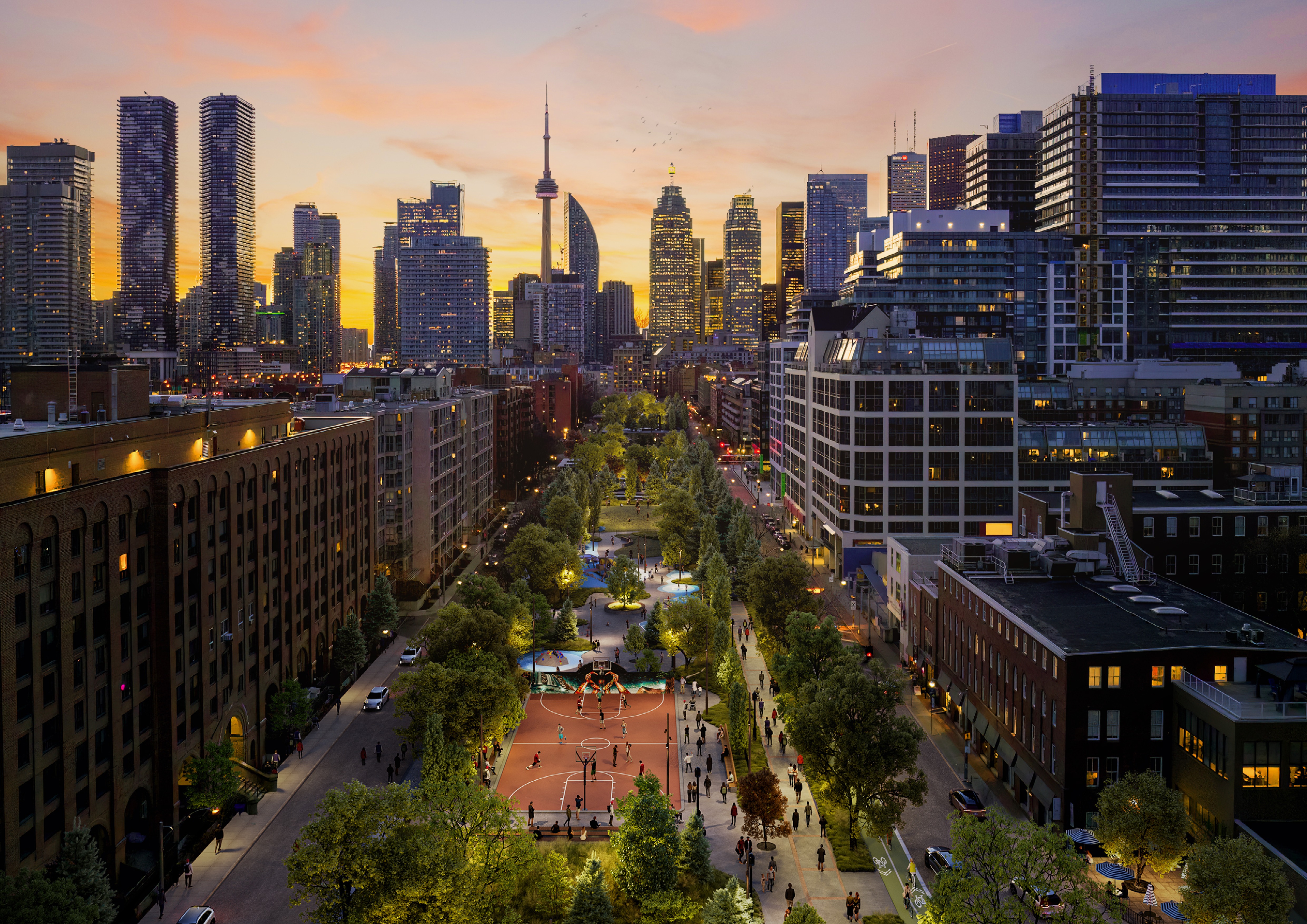
This session examines the redesign of David Crombie Park, a landmark public space in Toronto’s historic St. Lawrence neighbourhood. Led by SLA and Arcadis, the project transforms a beloved but aging linear park into a contemporary civic landscape that balances heritage preservation, climate action, biodiversity improvement, and community wellbeing.
Spanning nearly two hectares across seven city blocks, the project is one of Toronto’s most significant recent public realm investments. Rather than replacing the existing park, the design embraces adaptive reuse as a primary strategy. Existing structures, healthy trees, sports courts, and site materials are retained and revitalized, reducing embodied carbon while preserving the character and collective memory embedded within the landscape.
The project demonstrates how landscape architecture can address multiple challenges simultaneously: supporting active mobility, enhancing biodiversity, integrating Indigenous placekeeping, and strengthening social infrastructure. Dedicated Indigenous cultural spaces, language-learning opportunities, and interpretive elements foster deeper connections to place, while new recreational and gathering spaces respond to evolving community needs.
Through this case study, the session explores how carbon-conscious design, public consultation, and cultural collaboration informed every stage of the project - from material decisions and planting strategies to circulation networks and community programming. Participants will gain insight into how existing public spaces can be reimagined as resilient, inclusive, and climate-positive landscapes for future generations.
Learning Objectives
- Explore Preservation and Adaptive Reuse as Climate Strategies: Consider how preserving and revitalizing existing landscape elements can reduce embodied carbon while strengthening place identity and cultural continuity.
- Examine Indigenous Placekeeping in Public Realm Design: Reflect on how Indigenous partnerships, cultural knowledge, and placemaking practices can contribute to more inclusive, meaningful, and culturally responsive public spaces.
- Evaluate Ecological Approaches to Urban Park Revitalization: Analyze how biodiversity enhancement, habitat creation, carbon sequestration, and resilient planting strategies can be integrated into the renewal of existing urban landscapes.
- Understand Community-Centred Approaches to Public Space Renewal: Examine how public engagement, active mobility, social programming, and neighbourhood connectivity can shape the transformation of public spaces to better serve evolving community needs.
Presenters:
Nanna Maj Stubbe Østergaard, Associate Partner, Senior Project Manager, SLA
Nanna Maj Stubbe Østergaard is Associate Partner, Senior Project Manager at SLA, the internationally recognized Danish nature-based design studio. A trained landscape architect, she leads large-scale urban development and public realm projects that integrate design, ecology, and community to create resilient and biodiverse cities.
Nanna oversees SLA’s work across Canada, including major projects such as Quayside, Downsview West, and David Crombie Park in Toronto. Her practice explores how a radical approach to nature-based design in cities can strengthen ecological performance, climate resilience, and social infrastructure while enhancing quality of life in growing urban environments.
Nanna’s work has received several national and international awards, and she is a frequent lecturer and guest critic at universities, conferences, and design institutions across North America and Europe.
Pricing:
Licensed OAA Members: $42.50 + HST
OAA Interns and Students: $32.50 + HST
Non-Members: $63.00 + HST
NOTE:
1. An automatically generated confirmation will be emailed to you (once your registration goes through)
2. Please mark the time and date in your calendar
3. The OAA will email the Zoom Access Link to you one-day prior
4. OAA webinars are delivered via Zoom: Please check this Zoom Test Link or speak with your IT Consultant ahead of time, to ensure your device is compatible with Zoom. For technical concerns, please see the Zoom links for Technical Requirements and also their Download Centre.
For more information on the OAA Webinar Series click here.
If you have any questions or concerns, contact
OAA Continuing Education
e: OAAContinuingEducation@oaa.on.ca
t: 416.449.6898 Ext: 232
Attendance Policy: Members are required to attend at least 80% of a webinar in order to qualify for Continuing Education learning hours.
Cancellation Policy: Cancellations must be made at least 48 hours prior to the webinar in order to receive a refund. Webinar fees are not refunded if the cancellation is received after the deadline or if you are unable to attend.
Note: When registering for an OAA ConEd Webinar, please ensure you are using your Individual, rather than your Practice, account.